How Much Grill Cooking Area Do I Need?
Recommended picks


What Cooking Area Actually Means on a Spec Sheet
Grill cooking area is measured in square inches and usually refers to the primary grate only, the flat surface directly above the burners or coals where you place raw food. Many grills also list a secondary or warming rack area, which adds extra square inches to the total but sits several inches higher and runs at a lower temperature. A grill marketed at 500 sq in total might have 360 sq in primary and 140 sq in warming rack. When you are planning how much food you can cook at one time, count only the primary area. The warming rack is useful for finishing food or holding it, not for cooking proteins from raw.
Sizing by Household: A Simple Breakdown
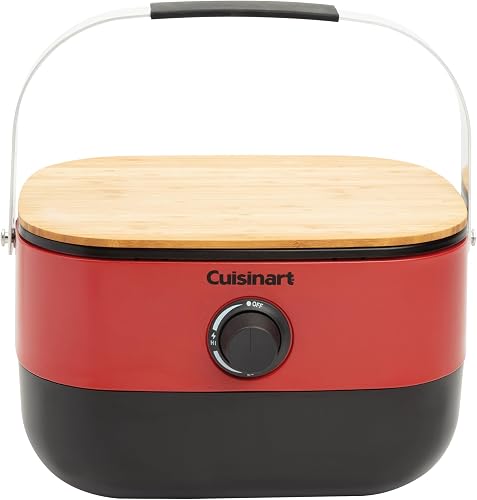
One to two people: 140 to 200 sq in is enough. The Cuisinart CGG-750 (ASIN B07C2KCQXX) offers 154 sq in on a cast-iron grate and handles two to three people per cook. Three to five people: 250 to 360 sq in covers a typical family. The Cuisinart CGG-306 (ASIN B00F3BHB80) sits at 275 sq in with two propane burners and 10,000 total BTUs, which fits 8 to 10 quarter-pound burgers at once. The Charbroil 463773717 (ASIN B01HITNEEE) steps up to 360 sq in with three burners across a porcelain-coated wire grate, rated 4.5 stars by over 3,500 buyers at $199. Six to eight people: plan for 400 to 550 sq in. Above eight people or frequent large parties: 600 sq in and above is where you stop running multiple batches.
Two-Zone Cooking and Why It Changes the Area Calculation
Two-zone cooking means running one side of the grill on high heat and the other side on low or off. It is the standard method for cooking thick cuts, bone-in chicken, or anything that needs to sear quickly and then finish slowly without burning. To run two zones effectively, you need at least two burners and enough grate space to actually keep the food separated, which means 300 sq in minimum on a two-burner setup. With only 200 sq in and a single burner, you cannot create a real indirect zone because the heat bleeds across the entire surface. If two-zone cooking is part of how you cook, size up rather than down, even for a smaller household.
How Cooking Style Affects the Size You Need
A household that grills burgers, hot dogs, and boneless chicken thighs can pack a 280 sq in grate fairly efficiently because those items are flat and cook fast. A household that grills bone-in ribs, whole spatchcocked chickens, or large brisket flats needs far more room because those cuts sprawl across the grate and require space around them for heat circulation. Corn on the cob, whole peppers, and large skewers also take up more linear grate space than their calorie content suggests. Think about the three dishes you cook most often and estimate how many items that adds up to. That mental picture is more useful than the spec sheet number alone.
The Cost of Buying Too Large
Every square inch of grate you heat but do not use is wasted fuel. On a propane grill, an oversized model running at full heat with half the grate empty burns through a 20-lb tank noticeably faster than a right-sized grill would. Larger grills also take longer to preheat, which adds time to every cook. A four-burner 600 sq in grill for a two-person household is a real mismatch in both fuel cost and preheat time. If you occasionally host larger gatherings, a smaller grill run in two batches is often more efficient than owning a grill sized for your biggest event all year. Buy for your typical cook, not your maximum occasion.
What the Warming Rack Adds and Does Not Add
A warming rack sits 4 to 6 inches above the primary grate and typically runs 50 to 100 degrees Fahrenheit cooler. It is practical for toasting buns, warming cooked food while the next batch finishes, or holding a side dish at temperature. It cannot substitute for primary cooking surface when you are grilling proteins from raw, because the lower temperature and distance from the heat source mean food cooks unevenly and slowly. Do not factor the warming rack into your calculation for how many steaks or chicken pieces you can cook simultaneously. Treat it as bonus storage space, not cooking space.
Common mistakes to avoid
- Counting the warming rack area as usable cooking surface when estimating how much food fits on the grill at once.
- Buying the largest grill in the price range without accounting for household size, then burning extra propane heating empty grate space every cook.
- Assuming a larger cooking area always means better output, when BTU per square inch, not total BTUs, determines how hot the grill actually runs.
- Sizing only for the biggest backyard party of the year instead of the three or four people you actually cook for every week.
- Overlooking the minimum area needed for two-zone cooking and buying a single-burner 200 sq in grill that cannot run separate heat zones.
- Ignoring footprint dimensions and buying a grill that physically does not fit the patio or deck space available once assembled.
Frequently asked questions
How many square inches of grill do I need for a family of four?
A primary cooking area of 260 to 320 sq in comfortably handles a family of four cooking burgers, chicken, or mixed proteins. The Cuisinart CGG-306 at 275 sq in is a practical example, fitting 8 to 10 standard burgers at once. If you cook thicker bone-in cuts or like to run two separate heat zones simultaneously, 320 to 360 sq in gives you a bit more room to work.
Is 360 sq in enough for a party of 8?
A 360 sq in grate can fit roughly 12 to 15 standard burgers in one pass, so a party of 8 is achievable with one batch of burgers. If you are cooking chicken pieces, ribs, or other bulkier cuts, plan on two batches. The Charbroil 463773717 at 360 sq in and three burners handles this well for casual entertaining, though for frequent large gatherings a 450 to 500 sq in grill saves time.
Does a bigger grill mean higher BTUs?
Not always. A larger grill needs more BTUs to heat effectively, but the number that matters is BTUs per square inch of cooking area, not the total. A grill with 30,000 BTUs over 600 sq in delivers 50 BTU per sq in, the same as a grill with 10,000 BTUs over 200 sq in. When comparing grills of different sizes, divide total BTUs by primary cooking area to get a fair comparison.
Can I cook for more people by using the warming rack as extra cooking space?
The warming rack works for finishing or holding food, not for cooking proteins from raw. The temperature differential between the main grate and the warming rack means items placed there cook very slowly and unevenly compared to food on the primary surface. Use the warming rack for buns, already-cooked food, or side dishes. For raw proteins, stick to the primary cooking surface.
What is the smallest grill cooking area that still allows two-zone cooking?
Two-zone cooking requires at least two independent burners and enough physical grate space to keep food separated by heat level. In practice, you need a minimum of about 280 to 300 sq in on a two-burner setup to run a meaningful indirect zone. Below that, the heat from the active burner bleeds across the entire small grate, making it difficult to maintain a true cooler side for finishing thicker cuts.